Our school vision
"This is the day that the Lord has made, let us rejoice and be glad in it." Psalm 118
Our curriculum vision for English
Our Intent
At Finchampstead Primary School, we promote high standards of language and literacy and help children develop a lifelong love of English through open discussion, widespread reading and writing for enjoyment.
We believe that reading is at the centre of learning. From early years through to Year 6, we encourage our children to learn to love books through daily storytelling sessions and well planned and exciting book based activities. Reading is initially taught through the Read Write Inc. Phonics programme which teaches children to read accurately and fluently with good comprehension. They learn to form each letter, spell correctly, and compose their ideas step-by-step. We also plan to bring reading to life and give it purpose via music, drama and performance. By reading and discussing a wide range of quality books, our children are able to develop culturally, emotionally, intellectually, socially and spiritually. Reading also enables pupils to learn new things and make connections with what they already know, both across the curriculum and beyond. Children are also encouraged to read a range of books in school and at home, from both our structured reading scheme and access to an interesting and engaging children’s library. Regular communication between staff, parents and children is encouraged to develop independent and reflective readers
Written work is based on quality texts by well-known authors or written specifically for a clear learning intention. Children are introduced to the text in an exciting and creative way, then given time to immerse themselves in the text through a range of stimulating activities. Discussion and self-expression is key to all written work so children can communicate clearly their ideas and emotions to others. They then create their own written responses to the text in a variety of ways, adapting their language and style for a range of contexts, purposes and audiences. The learning also reflects each child’s needs and challenge. We write with an audience in mind and often showcase the children’s work in ‘published’ books, displays or one to one with children from other classes. Children are also encouraged to read their work to others or to perform as a class. In this way we develop pride and excitement in the power of the written word and teach communication skills to build capable and confident writers who know that word choice and style of writing can bring about change.
Handwriting:
Writing begins with mark making in our Foundation stage. We then develop the formation of numbers and letters through structured learning time and through play. We teach cursive handwriting (joined letters) once printed letters are secure, to encourage fluency and help to improve spelling. Good presentation skills are important and help children develop pride in their work. We also use ICT to present our work. We aim for our children to develop a clear, fluent written style they are proud to use.
Pupil Subject Leaders
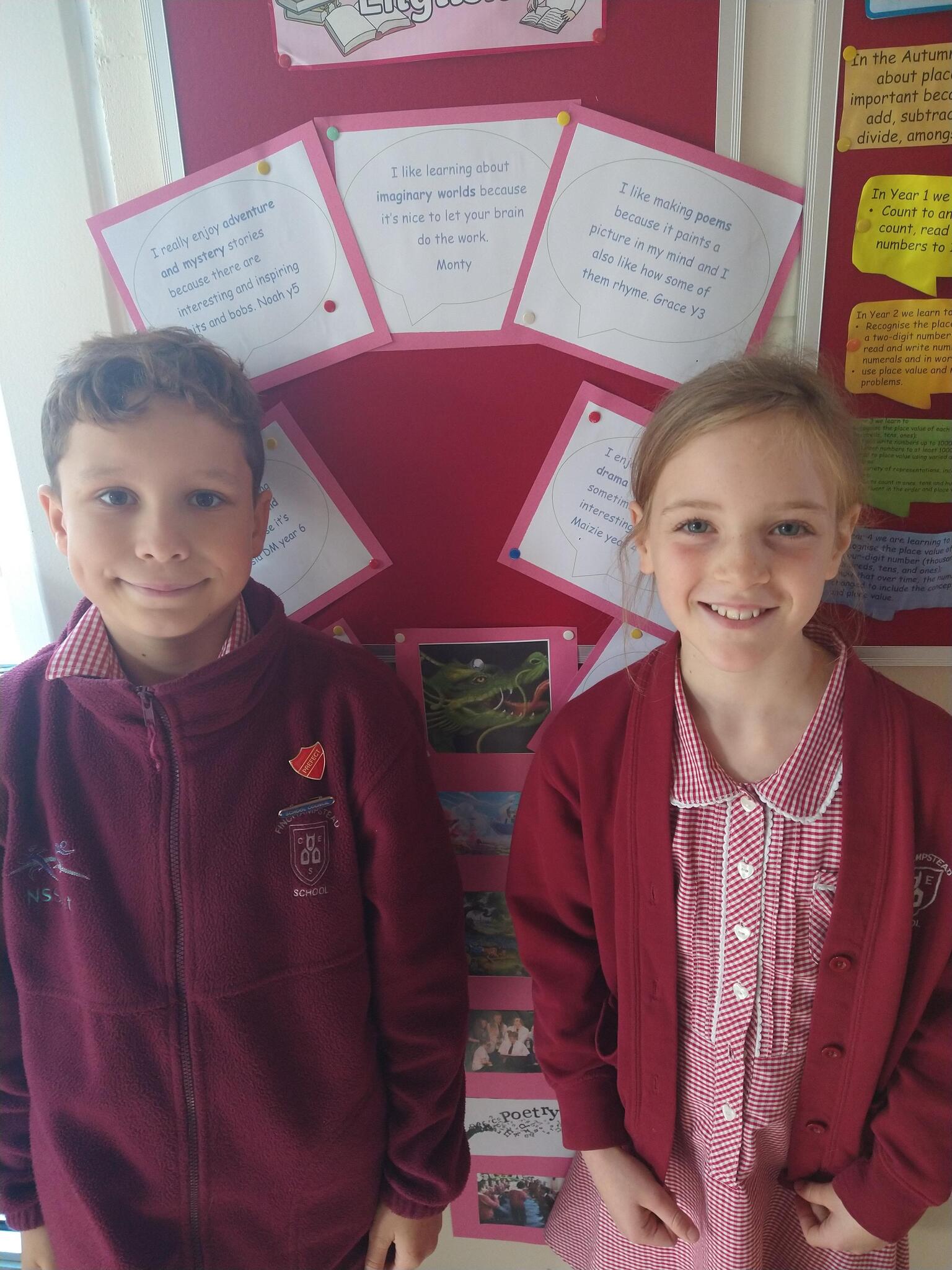
-
Helping your child to read Parental top ten tips for learning to love reading.
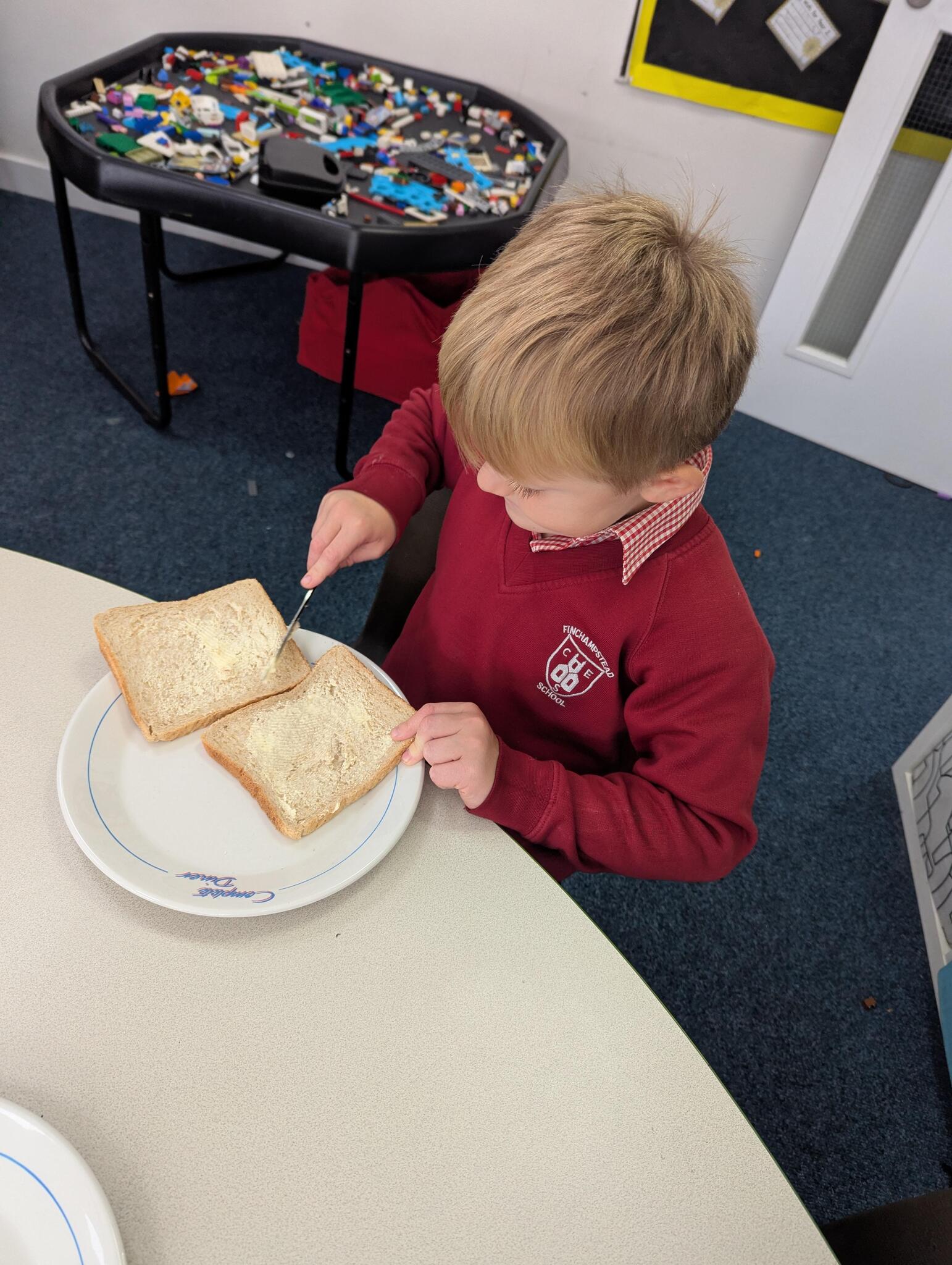
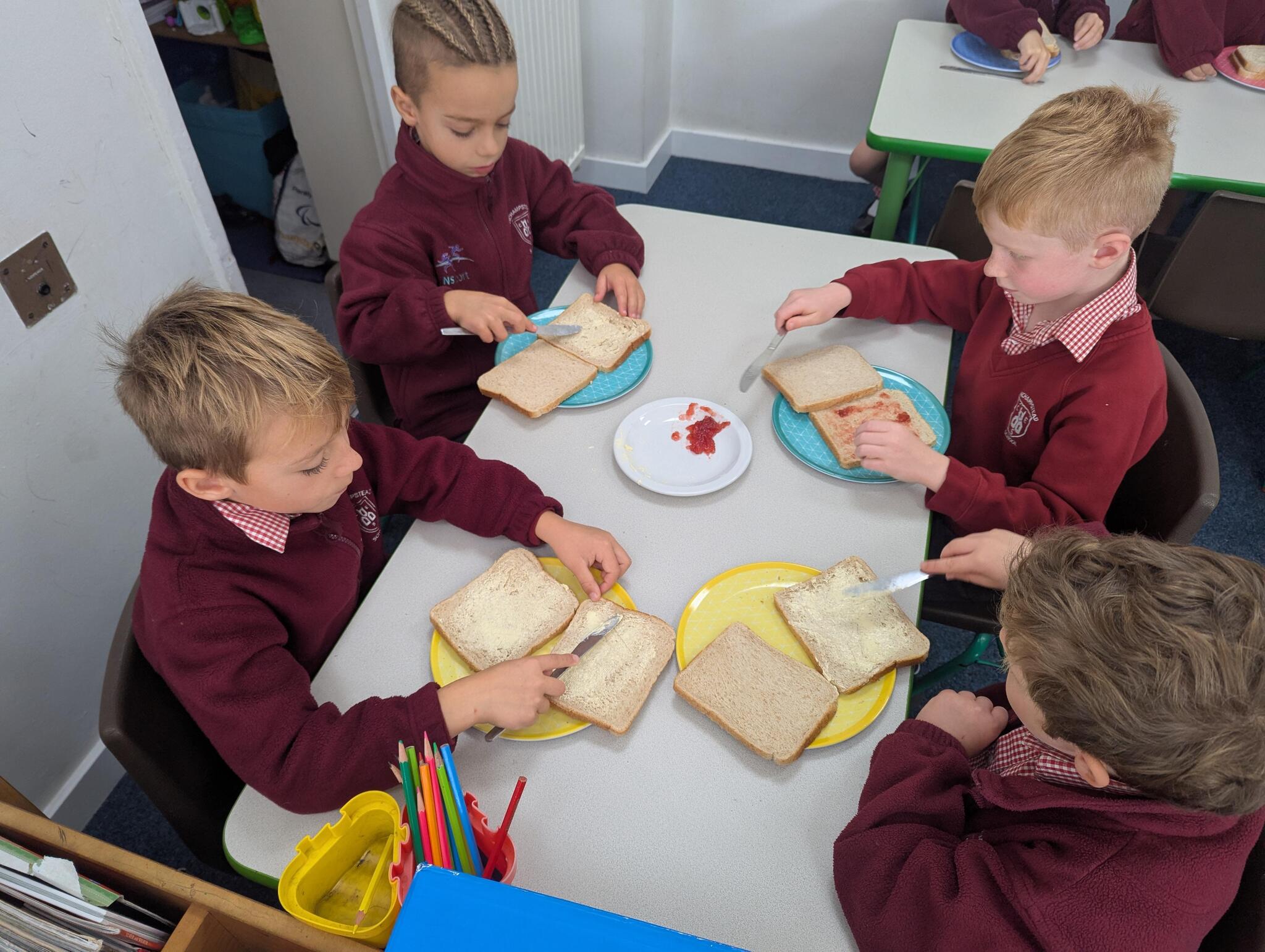
We realised how important clear instructions are as we made jam sandwiches otherwise we had jam and bread and butter all upside down, back to front and in a muddle!
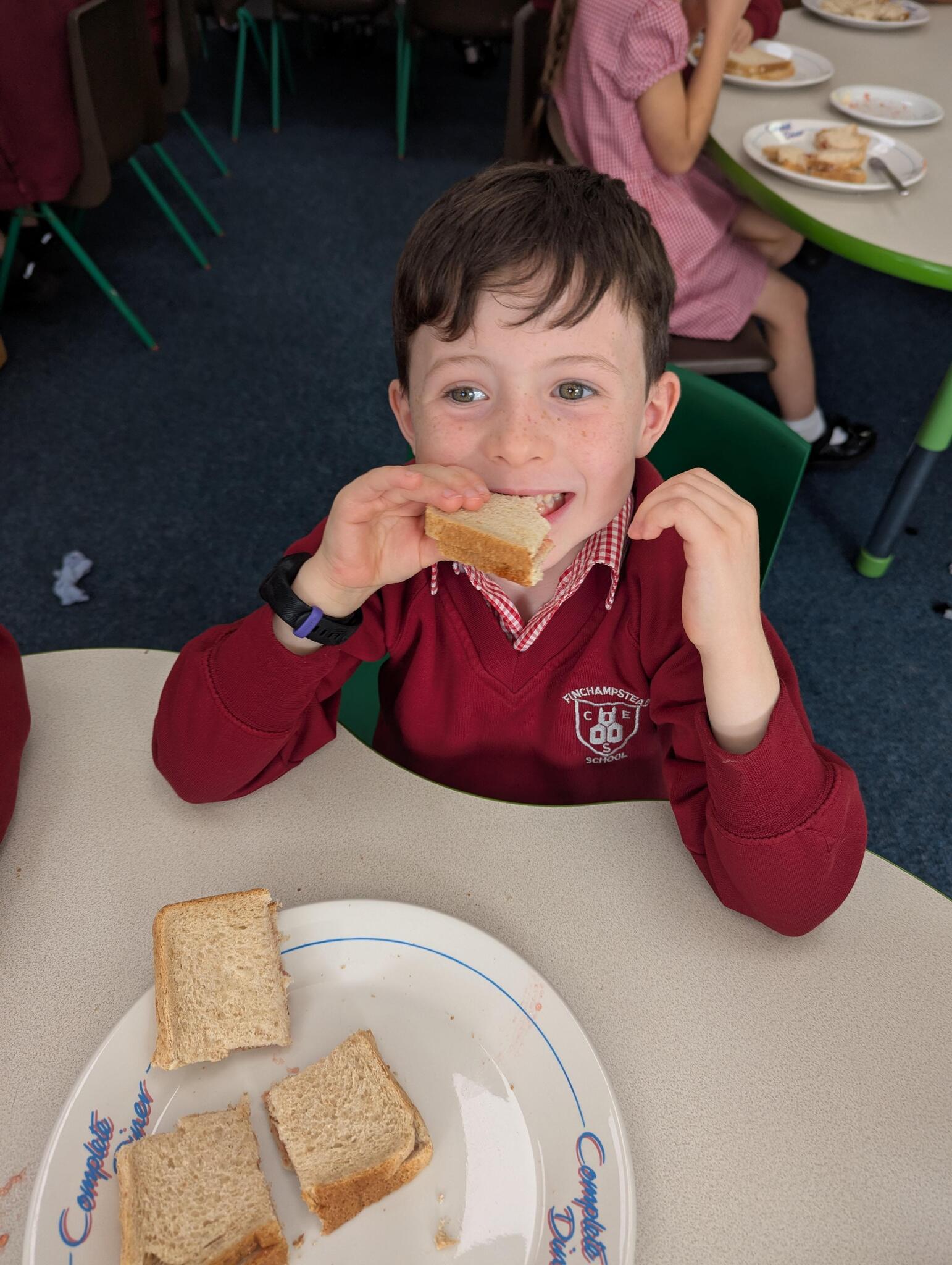
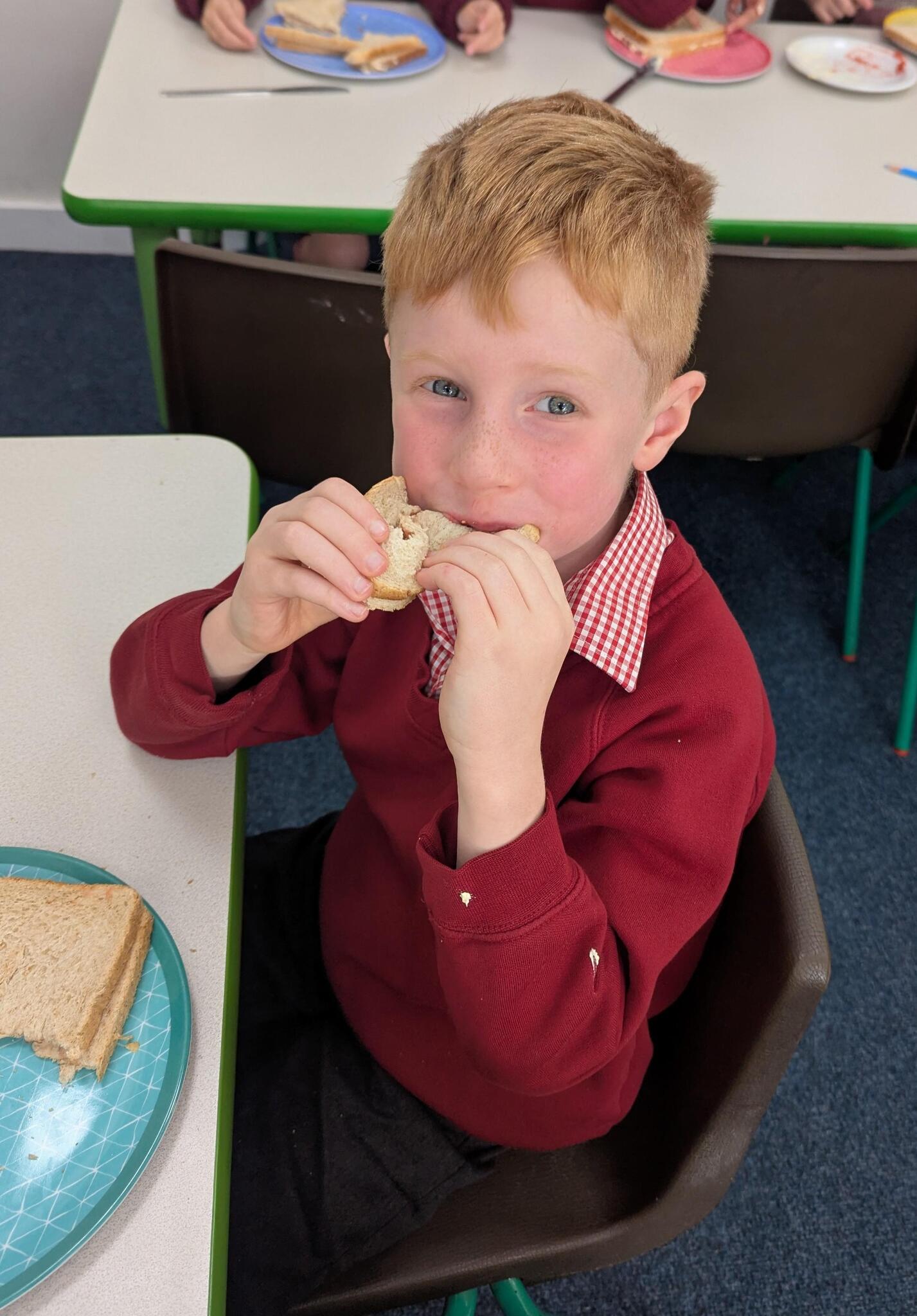
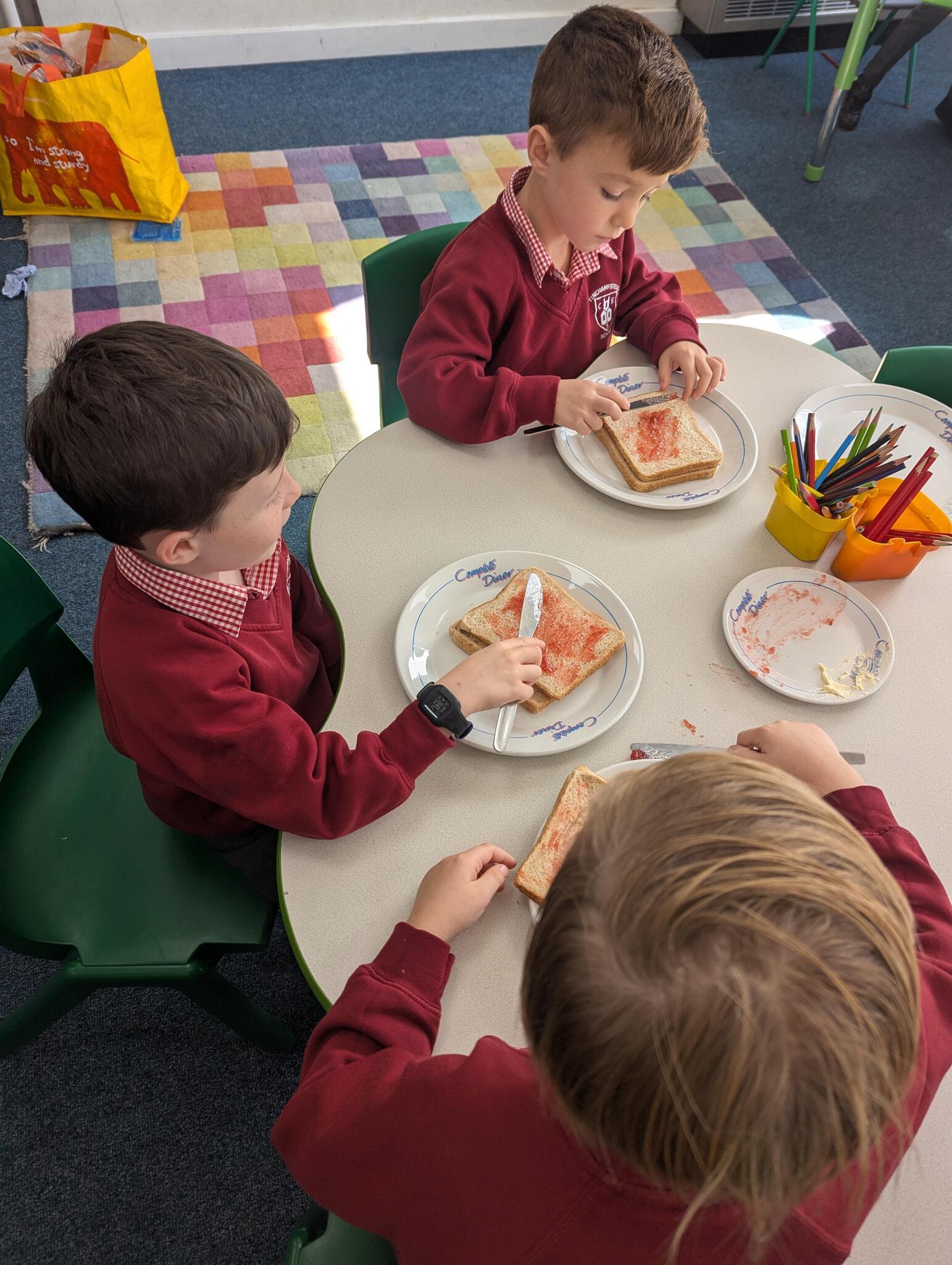
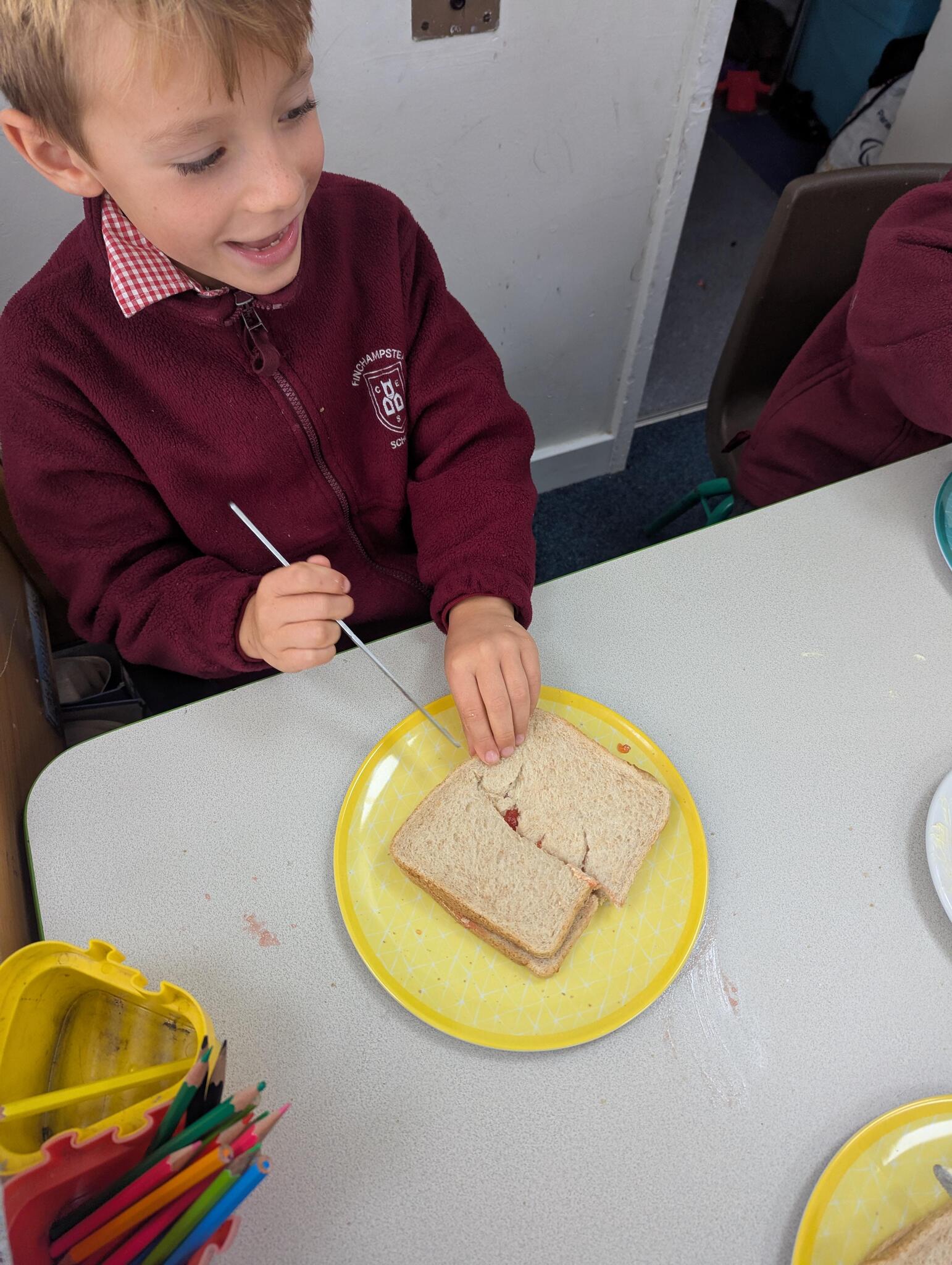
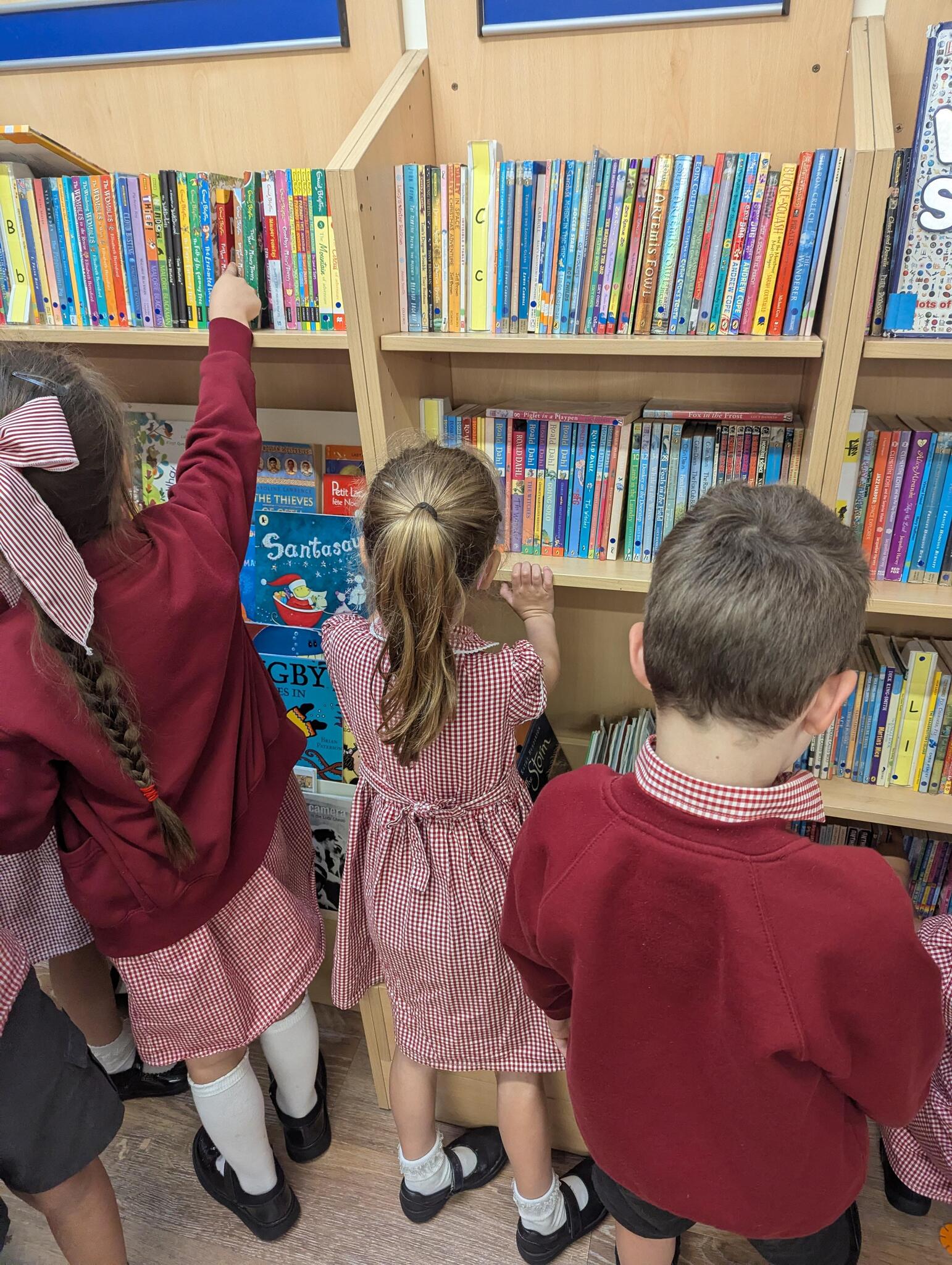
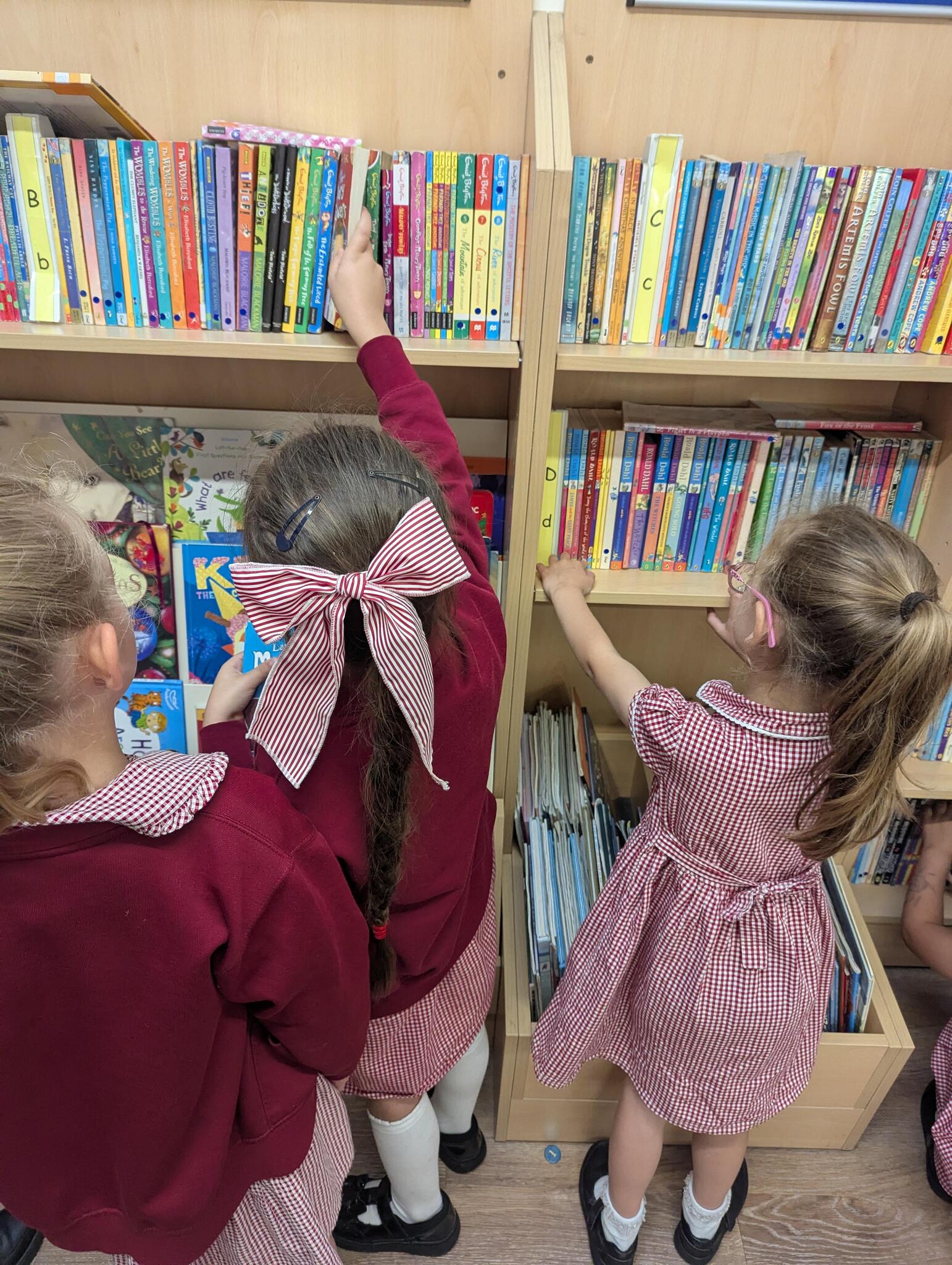
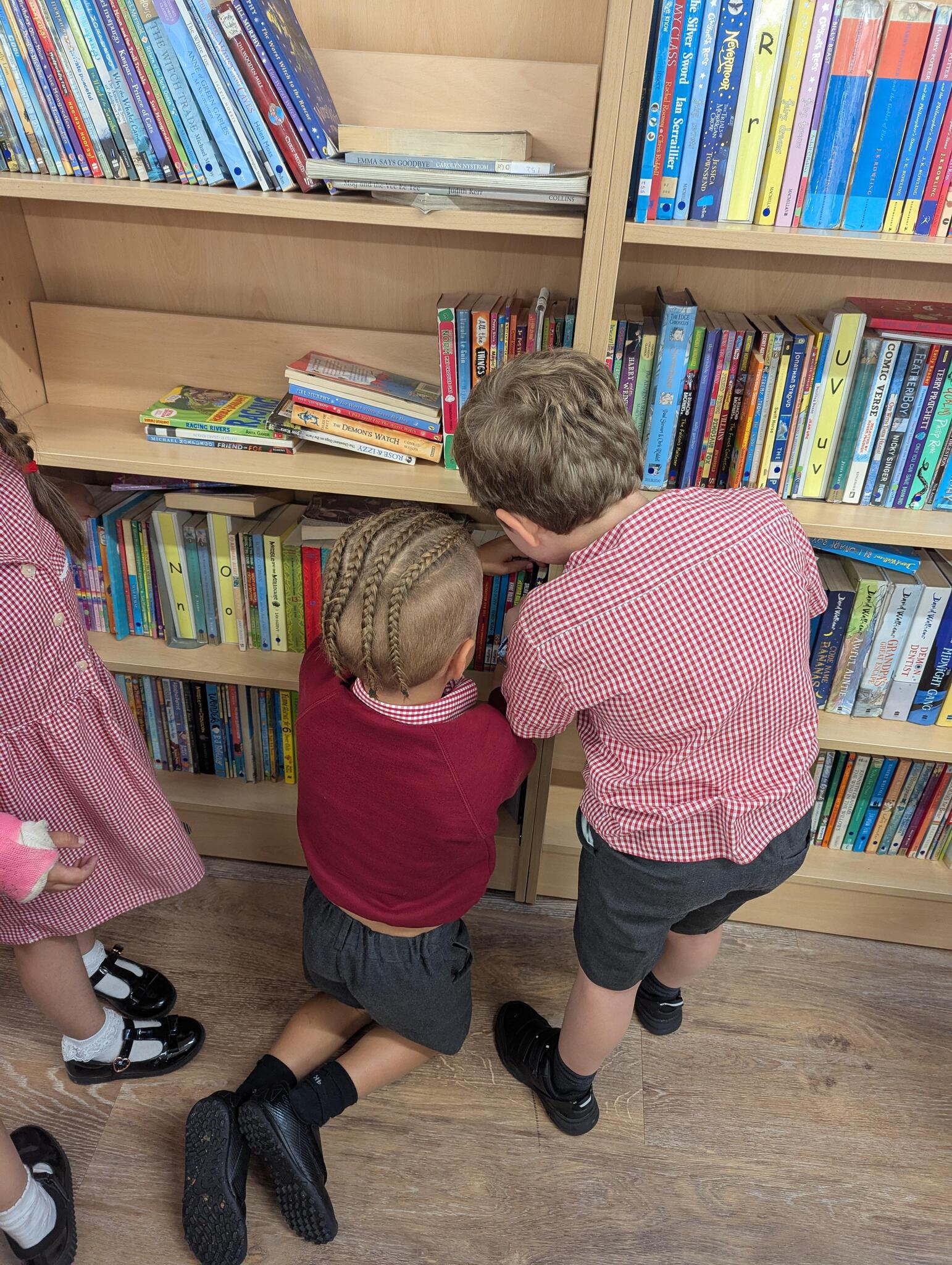
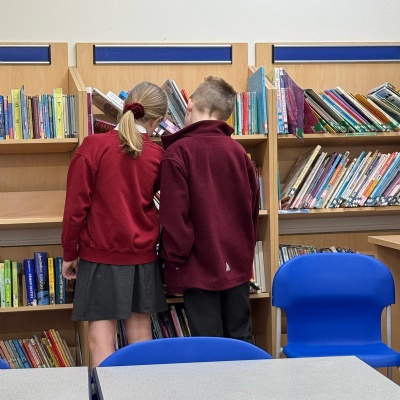
We practiced our library skills as we found books to write reviews on.
Bullfinch completed their own versions of The Sound Collector poem.
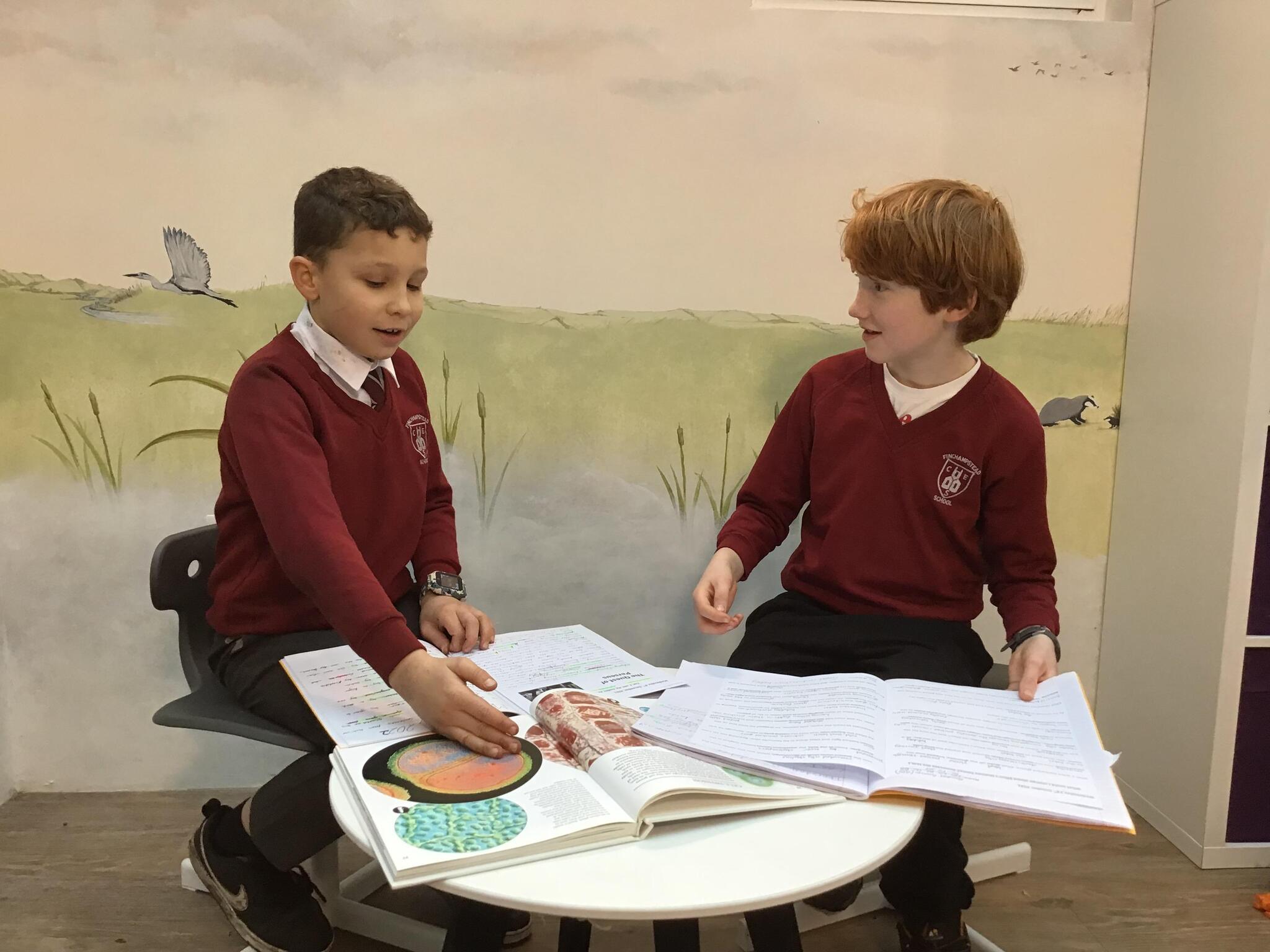
Year 5&6 have been preparing to write their explanations about plant life cycles. But first, they researched the process, working collaboratively to create information posters.
Bullfinch have been inspired by the poem The Sound Collector and spent time using the iPads to capture sounds around school. This will help inspire us with our own poetry.
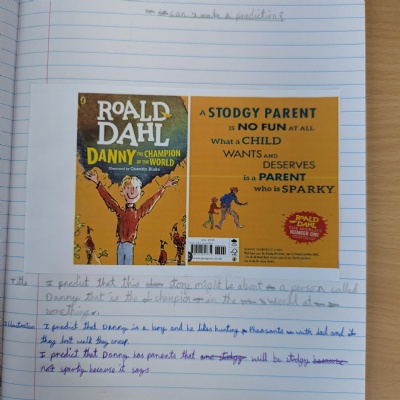
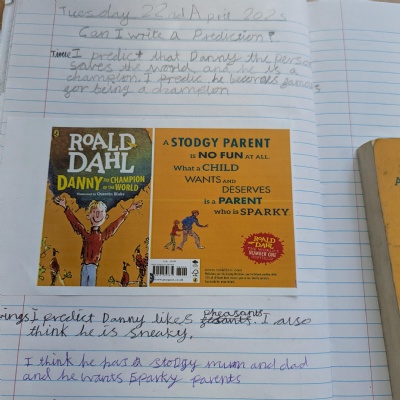
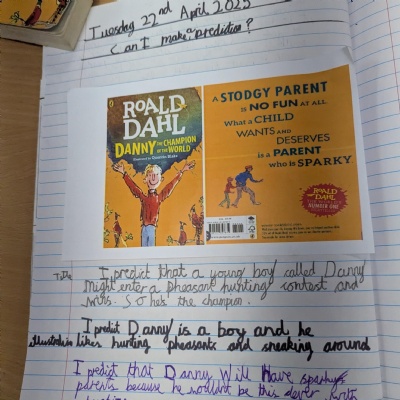
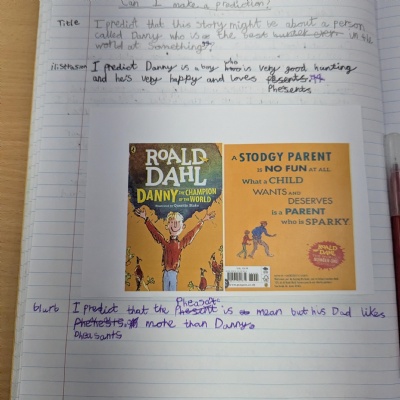
Chaffinch class have enjoyed making predictions about their new book, 'Danny, the champion of the world'. First, they used the title, then the illustration on the front cover and finally the blurb to make predictions about the story. I wonder how many predicted why he was indeed a champion?

Chaffinch class shared their news reports with great pride and Bullfinch Class gave some great feedback. It's lovely to write for an audience.
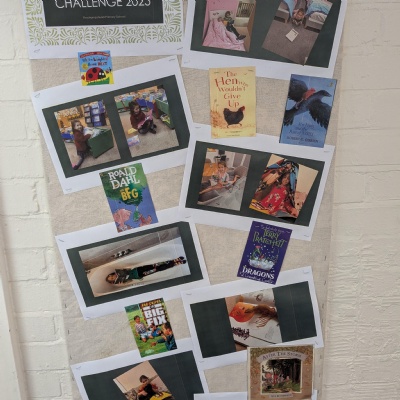
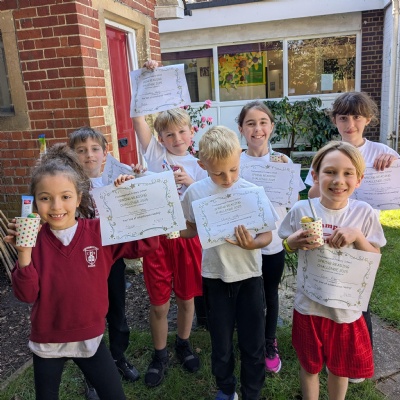
Our Spring Reading Challenge was a great success across the school. Children enjoyed the challenge of reading different types of books, in different ways, in different places. Lots of interesting photographs were sent in with the challenge, including one of a lizard reading a story! The message was clear: wherever, whenever or however ... just keep reading!
We celebrated world book day exploring books through music, art and computing. Working in mixed ages we enjoyed carouseling through school.
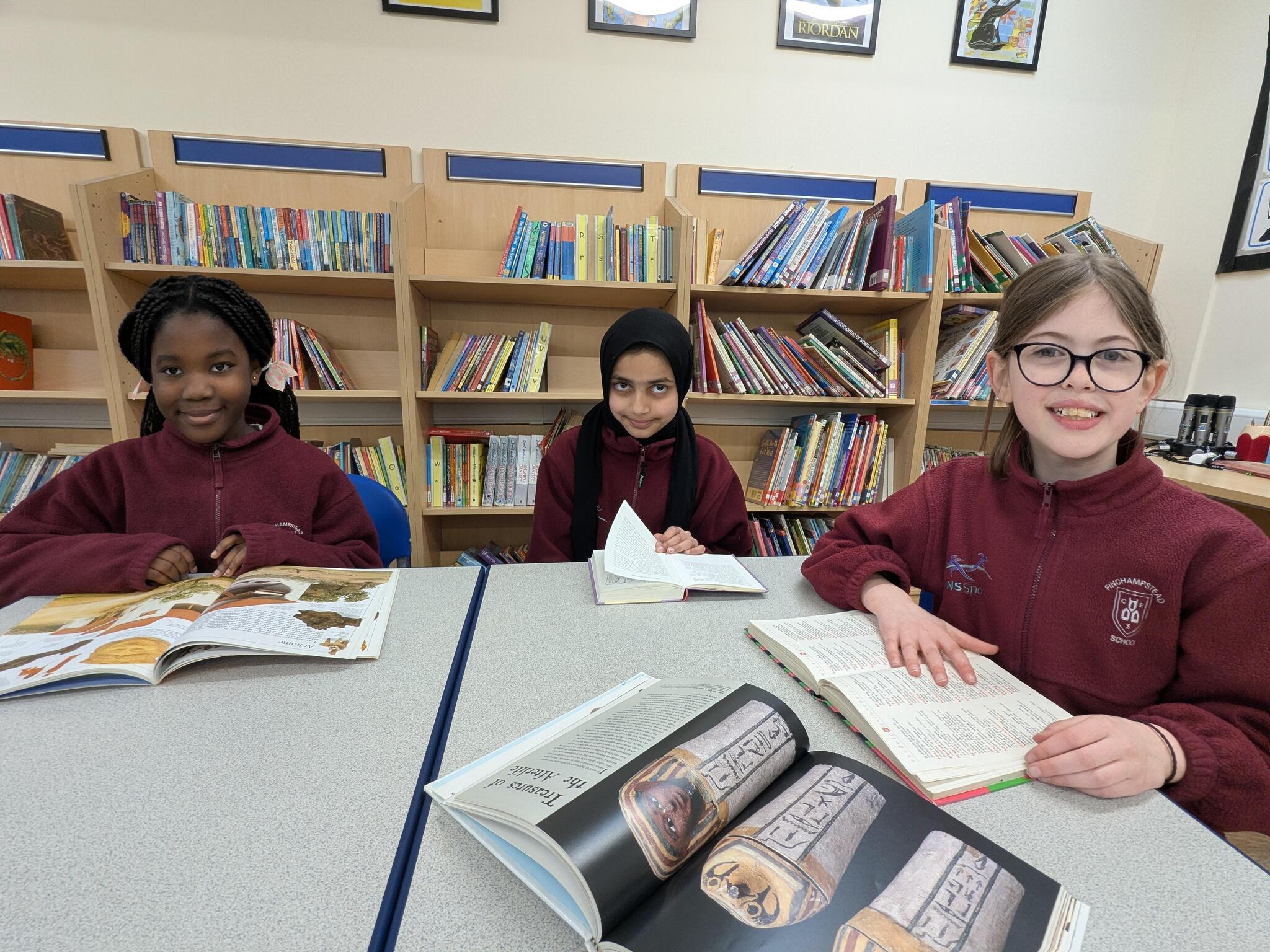
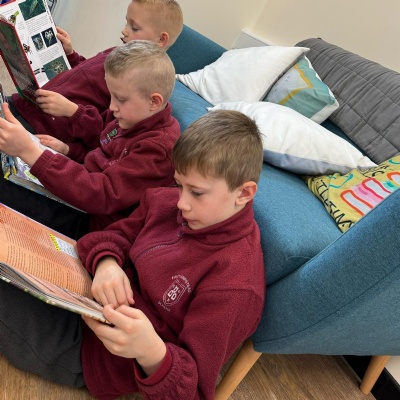
Enjoying library time
KS2 Children's views on Reading and Writing
Reading – there is clear enthusiasm for both individual and shared reading. They are proud of their fluency and comprehension levels and understand the importance of reading in terms of building a strong vocabulary, for both oracy and written work. They also clearly articulated the importance of reading in everyday life and in their education and career futures.
Writing – again there is great enjoyment, enthusiasm, and pride in written work. We have several aspiring authors. They would like more opportunity for ‘free writing’, collaborative writing and the 'use of a machine' to generate ideas.
You can see more detail on the attached word documents.
We asked some of our children to comment on their Reading (14.3.22)
They told us lots of interetsing things and the key findings are:
- In general, our children read regularly at home, both school books, library books and their own 'treasured' books.
- Books are changed regularly and they know they dont have to strugle to read; help is available in school to ensure reading is sometimes a challenge but always achievable.
- They enjoy reading lessons in school and love finding out the meaning of exciting new words - exploring vocabulary is an area of enjoyment across all classess in school.
The discusions also helped us to form our plans for the teaching of reading and our next steps are:
- Provide updated parental support to talk about reading books at home.
- Support children in school to ensure approparite book choice in terms of challenge and enjoymnet.
- Continue daily reading of class books/poetry/articles and discusion of favourite books to encourage discusion of quality texts.
We asked some of our children to comment on their English lesson today (13.9.21). Here's what they told us:
Did you enjoy today's lesson?
Y3 - yes because I really like writing and learning when we talk about it first with the teacher and with my friends.
Y6- I loved today's lesson. It made me feel good inside. It was text mapping and drawing helps us to understand the story, even if we struggle to write it all down. Everyone can do it.
Y2 - yes because we were modelling with body parts so we were excited about our writing.
What did you learn that was new today?
Y4 - poetry doesn't have to rhyme. I also learned that verbs add detail. Creeping and flowing are different ways to move. Slow and fast.
Y2 - I learnt a song about how the body parts are all connected.
Y3 - that some poems can actually have a' back story' so we can learn more about the people who write them.
How hard was todays lesson on a scale of 1-10?
Y5 - about a 6. Some words were challenging and some were easy to understand and draw.
Y3 - about a 7. It was a bit challenging but I worked in a group with my teacher and that helped me to understand.
How do the adults in the lesson help you to learn?
Y6 - if you can easily do it they give you an extra challenge and if it's hard they break it down for you so you understand it.
Y5 - they model it for me on the board.
Y3 - they talk it over with me.
Have you been successful today and how do you know?
Y2 - yes because the teacher told me I had got my body parts in the right order.
Y3 - a bit of both because I got 10/10 on my spelling but then I got a bit distracted and didn't finish my poetry questions.
Y5 - yes I was because my partner gave me good feedback about what I did well and what would make it better for next time.
What do you think you need to learn next?
Y6 - how to improve my word choices. Maybe by using a thesaurus.
Y4 - how to read poetry out loud with more expression and to use challenging wow words in my own poems.